1 Jul 2026
Combining Opportunity Scanners and Capital Protection Methods in Multiple Event Phases
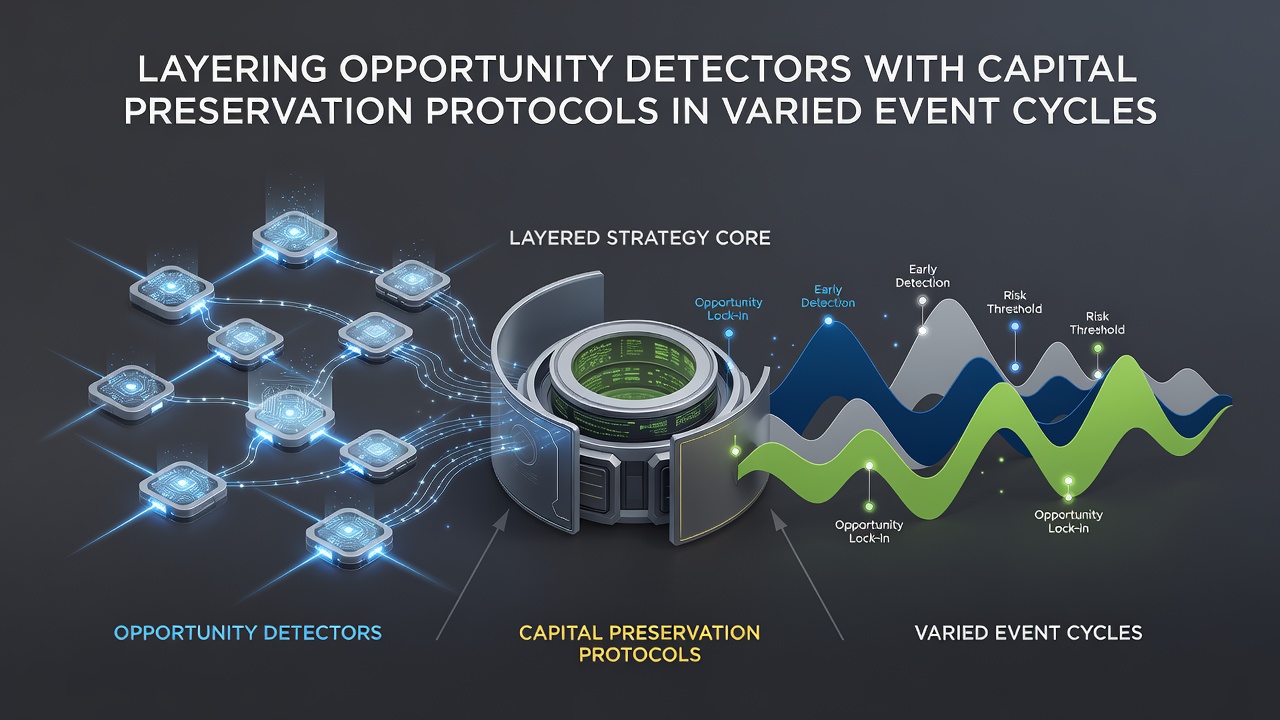
Data from mid-2026 indicates that systematic approaches to identifying value opportunities while maintaining strict capital controls continue to evolve across different sporting calendars, with particular attention paid to how these frameworks adapt during periods of high event density such as the July tournament clusters in tennis and football seasons. Researchers at institutions tracking global betting patterns note that opportunity detectors, including momentum analysis tools and line movement trackers, function most effectively when integrated with protocols that adjust stake sizes based on cycle-specific volatility levels.
Understanding Varied Event Cycles in Multi-Sport Environments
Event cycles encompass pre-tournament preparation phases, qualifier stages, main draw periods, and post-event analysis windows, each presenting distinct data flows that scanners must process differently. In July 2026, observers documented how tennis circuits overlapped with European football pre-season fixtures, creating compressed timelines where line movements accelerated and required rapid cross-referencing between sports. Studies from the European Association for the Study of Gambling show that capital preservation protocols, such as segmented bankroll allocation and dynamic stake recalibration, reduce exposure during these overlaps by enforcing maximum drawdown thresholds tied to cycle duration rather than individual match outcomes.
Layering Detection Tools with Preservation Frameworks
Opportunity detectors operate through algorithms that flag discrepancies between implied probabilities and statistical models, yet these outputs gain stability when filtered through preservation layers that monitor overall portfolio heat. One documented approach involves routing scanner alerts into a secondary protocol that applies Kelly fraction adjustments scaled to the remaining length of the current event cycle, ensuring that stake escalation remains proportional to verified edges rather than raw signal volume. Industry reports from the Canadian Centre on Substance Use and Addiction highlight that organizations implementing such layered systems recorded lower variance in monthly returns during periods of mixed sport scheduling compared with single-tool deployments.
Pre-Match to In-Play Transitions
Transitions between pre-match and in-play phases demand that detectors recalibrate for live data influx while preservation protocols activate tighter stop-loss parameters. Figures released by the Australian Gambling Research Centre reveal that portfolios using automated handoff routines between these phases maintained steadier capital curves across 2025-2026 event windows, particularly when football corner and tennis break-point metrics were processed through unified dashboards. The integration prevents overcommitment by requiring confirmation from both detection layers before releasing additional funds mid-cycle.

Adaptation Across Seasonal and Tournament Variations
Seasonal shifts alter the reliability of momentum signals, prompting preservation protocols to incorporate cycle-length multipliers that temper position sizes during shorter, high-intensity clusters. Data compiled by the International Centre for Sports Studies demonstrates that accumulators spanning qualifiers through finals benefit from staged capital release schedules, where early-cycle exposure remains capped at fractions of later-stage allocations. Those monitoring these patterns observe that July 2026 alignments between grass-court tennis and international football friendlies produced measurable increases in cross-sport correlation, necessitating protocol updates that account for simultaneous volatility spikes.
Implementation Considerations for Multi-Cycle Portfolios
Successful layering requires consistent data pipelines that feed scanner outputs directly into preservation engines without manual intervention, allowing real-time stake modulation based on cycle progression. Reports from academic working papers on quantitative betting models indicate that portfolios applying such automation exhibited reduced sensitivity to isolated event anomalies, as capital controls automatically tightened when detector confidence scores dipped below cycle-specific thresholds. External validation from regulatory-adjacent research bodies continues to track these developments through anonymized performance datasets.
Conclusion
Integration of opportunity detectors with capital preservation protocols across varied event cycles produces measurable structural advantages in risk distribution, according to aggregated industry metrics through July 2026. Continued refinement of these layered systems aligns with evolving tournament calendars and data availability, supporting sustained application across tennis, football, and other overlapping sports.