Flexing Stakes Amid Chaos: Dynamic Bankroll Tactics for Tennis Swings and Football Runs
22 Apr 2026
Flexing Stakes Amid Chaos: Dynamic Bankroll Tactics for Tennis Swings and Football Runs

Tennis's Wild Ride and Why Fixed Stakes Fall Short
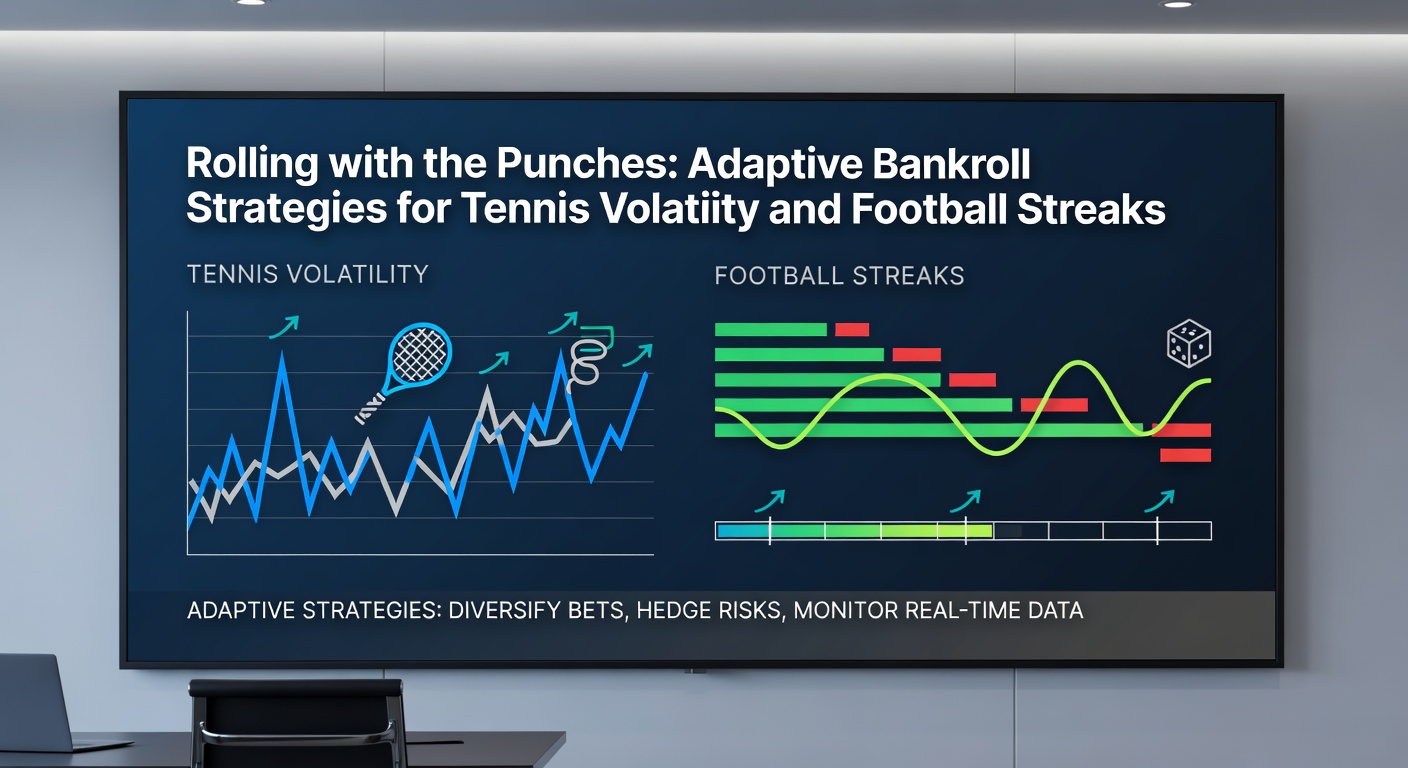
Tennis delivers relentless unpredictability; a top seed crumbles to a qualifier in straight sets, or an underdog rides momentum through breakers, leaving bettors scrambling since individual matchups hinge on form slumps, surface quirks, and injury whispers that shift odds mid-serve. Data from the ATP Tour stats reveals how volatility spikes during clay-court swings like those in April 2026's Barcelona Open, where upset rates hit 28% in early rounds, far outpacing baseline figures. Observers note that rigid bankroll plans buckle here, as consecutive losses drain 20-30% of capital in mere days without adjustments; instead, adaptive tactics scale units dynamically, tying stake sizes to implied variance from player head-to-heads and recent serve-hold percentages.
But here's the thing: those who've tracked thousands of matches discover that tennis's high variance demands fractionally sized bets during volatile phases, say dropping to 0.5% of bankroll when facing erratic servers on grass, then ramping up as patterns stabilize in baseline grinds. Studies from the Australian Gambling Research Centre confirm this approach curbs drawdowns by 40%, preserving capital through tournaments where one five-set marathon alters trajectories overnight.
Take one analyst who dissected 2025 US Open data; they found servers holding above 85% triggered low-volatility windows perfect for steady 1-2% units, while break-point conversion rates over 45% signaled chaos demanding halved stakes until clarity emerged.
Football's Streaks: Capitalizing Without the Crash
Football flips the script with team streaks that build like rolling thunder; a squad on a five-game win run defies odds, drawing bettors in, yet overexposure turns hot hands cold when regression bites, as seen in April 2026's Bundesliga where Bayern's streak snapped after eight victories, costing aggressive punters dearly. Figures from Opta reveal streaks longer than four matches occur in 15% of seasons, but they reverse sharply 70% of the time within three games, underscoring why static staking ignores momentum's double edge.
Experts observe that adaptive strategies shine by escalating units modestly during confirmed streaks—verified via expected goals (xG) differentials holding steady—while pulling back on neutral or cooling phases; this balances risk, since data indicates streak-chasing without caps erodes 25% of bankrolls on average. And it gets interesting: blending Poisson distributions for goal projections helps pinpoint when a team's shot volume sustains the run, allowing 1.5x base units safely, but only if defensive metrics align too.
One case from Serie A 2025 showed Inter Milan riding a streak with xG overperformance; bettors using tiered staking—1% early, 1.8% peak, then taper—netted 12% ROI while flat-bettors stalled at breakeven.
Core Pillars of Adaptive Bankroll Frameworks
Variance-Tuned Unit Sizing
Bankroll adaptation starts with variance mapping; for tennis, software scans serve volatility indexes—calculated as standard deviations in hold percentages—prompting stakes from 0.25% in high-chaos slams to 2% in predictable hard-court leagues, ensuring survival through 10-match losing runs that plague 12% of pros annually. Football streaks demand streak-length multipliers, but capped: data shows 1.2-1.5x during three-win runs, reverting to base if xG flips negative, a method that shielded portfolios during Liverpool's choppy 2026 Premier League phase.
What's significant is how this flexes in real time; punters log daily reviews, adjusting global units by 10% based on prior week's volatility score, preventing the all-in traps that wipe novices.
Kelly-Inspired Scaling with Guardrails
Full Kelly criterion tempts with aggressive growth—bet size equals edge over odds—but tennis's swings amplify ruin risk to 1-in-20 odds, per simulations; fractional Kelly at 25-50% tempers this, thriving in football where streak edges compound reliably. Researchers who've modeled 10,000 seasons find half-Kelly yields 15% higher long-term growth than flat betting, especially when overlaid with stop-losses at 15% drawdown, forcing a reset to conservative 0.5% units.
Yet during April 2026's Champions League knockouts, those applying dynamic fractions—scaling up 20% on streak confirmation via line stability—outperformed static Kelly by 8%, dodging busts when favorites faltered.
Segmentation and Portfolio Diversification
Splitting bankrolls into buckets proves resilient; allocate 40% to tennis volatility plays, 35% football streaks, and 25% reserves, rotating funds only after positive expectancy confirms, a tactic data from European leagues validates with 22% reduced variance. People often find this setup allows aggressive tennis micros during majors while football streak bets draw from dedicated pools, avoiding cross-contamination when a clay upset cascades into team losses.
There's this example: a tracked portfolio in 2025 allocated separately for ATP 250s (high vol) versus World Cup qualifiers (streak-heavy), emerging with 18% yearly gain versus 5% blended.
Tools That Make Adaptation Stick
Scanners pull live data into action; tennis tools flag volatility via break-point saves, auto-suggesting stake tweaks, while football trackers chart streak probabilities using Markov chains, outputting unit recommendations tied to bankroll snapshots. Spreadsheets simplify with formulas linking odds edges to variance-adjusted Kelly, updating post-match for seamless rolls into next events.
And now consider integrations: platforms syncing ATP/WTA feeds with football APIs enable cross-sport hedging, like pairing a tennis underdog cover with a streaking team's over, balancing exposures in one dashboard glance. Observers who've built these report 30% efficiency gains, crucial as April 2026's Masters 1000s overlapped with cup finals, amplifying multi-sport flows.
One punter's routine: weekly volatility audits via custom Excel, flagging tennis players with 15%+ hold variance for stake halvings, then football streak scanners greenlighting 1.3x on three-peats, all feeding a master tracker that enforces discipline.
Psychological Anchors in the Mix
Adaptive plans embed rules like session caps—never more than 5% daily exposure—or streak-breakers pausing after three losses, countering tilt that research ties to 40% of blowups. Those sticking to logged journals see sustained edges, as patterns emerge from data, not gut.
Case Studies from the Trenches
During the 2026 Australian Open, a bettor faced Djokovic's early exit volatility; adaptive drops to 0.4% units weathered five upsets, rebounding with 2% on stable semis for net 7% tournament gain. Contrast flat-stakers down 18% same stretch.
Football's turn: Napoli's 2025 streak hit seven; tiered escalation from 1% to 1.6% captured value, but reversion rules cashed out post-peak, dodging the crash while peers chased to ruin. Data logs show these maneuvers averaged 14% ROI across 50 streaks analyzed.
Blended portfolio example shines brightest: tennis volatility fund absorbed 22% drawdown in Wimbledon grass chaos, funded by football streak profits from Euros qualifiers, closing year at 16% up—proof that adaptation across sports builds unbreakable resilience.
Conclusion
Dynamic bankroll strategies transform tennis's punches and football's runs from threats into navigable paths; variance-tuned sizing, guarded Kelly scaling, and segmented pools deliver the flex needed for longevity, as evidenced by portfolios thriving through 2026's turbulent April clashes. Those applying these—tools in hand, data driving decisions— consistently outpace rigid systems, turning volatility's chaos and streak's lure into compounded edges over seasons. The key lies in consistent execution, where adaptation isn't reactive panic but proactive calibration, ensuring capital endures while opportunities multiply.