Pairing Tennis Momentum Scanners with Football Line Trackers: Forging Resilient Multi-Sport Betting Portfolios
4 Apr 2026
Pairing Tennis Momentum Scanners with Football Line Trackers: Forging Resilient Multi-Sport Betting Portfolios

Unpacking Tennis Momentum Scanners
Experts who track tennis betting edges often rely on momentum scanners, tools that analyze real-time shifts in match dynamics by processing data like serve holds, break points converted, unforced errors, and rally lengths; these scanners flag moments when a player's form surges or dips, revealing value bets hidden in fluctuating odds. Data from recent ATP and WTA tournaments shows these tools identify up to 15% more profitable opportunities during mid-match swings compared to static pre-match lines, especially in best-of-three sets where momentum flips happen 22% more frequently than in longer formats. Observers note how scanners integrate machine learning algorithms trained on historical datasets spanning thousands of matches, predicting momentum reversals with 78% accuracy in clay court events; that's where the rubber meets the road for bettors chasing edges in qualifiers or early rounds.
And yet, those who've deployed these scanners across grand slams discover they shine brightest when paired with tournament-stage filters, capturing value from underdogs rallying in tiebreaks or favorites fading under pressure; one study highlighted how such tools boosted ROI by 12% for users focusing on women's draws, where momentum volatility runs higher due to shorter points. But here's the thing: standalone use limits scalability, since tennis calendars cluster tightly around majors, leaving gaps in action.
Decoding Football Line Trackers
Football line trackers, meanwhile, monitor odds movements across global leagues by scraping bookmaker feeds for discrepancies in match lines, goal totals, and player props; they alert users to drifts caused by public money flows, injury news, or sharp book adjustments, often pinpointing +EV bets within seconds of line shifts. Figures from the 2025-26 Premier League season reveal trackers caught 18% of profitable drifts in over/under markets, particularly during halftime when half-time/full-time lines adjust sharply based on first-half dominance. Researchers at the International Betting Integrity Association documented how these tools correlate line reversals with in-play events like red cards or substitutions, achieving detection rates above 85% in high-liquidity matches.
What's interesting is how trackers layer in contextual data such as expected goals (xG) models and possession heatmaps, allowing bettors to validate drifts against underlying stats; take one case from Serie A where a tracker's alert on a -0.5 Asian handicap line reversal netted steady gains after confirming team fatigue via xG underperformance. That said, football's packed schedule—from Champions League knockouts to domestic cups—demands diversification to weather variance, which is where cross-sport synergy enters the picture.
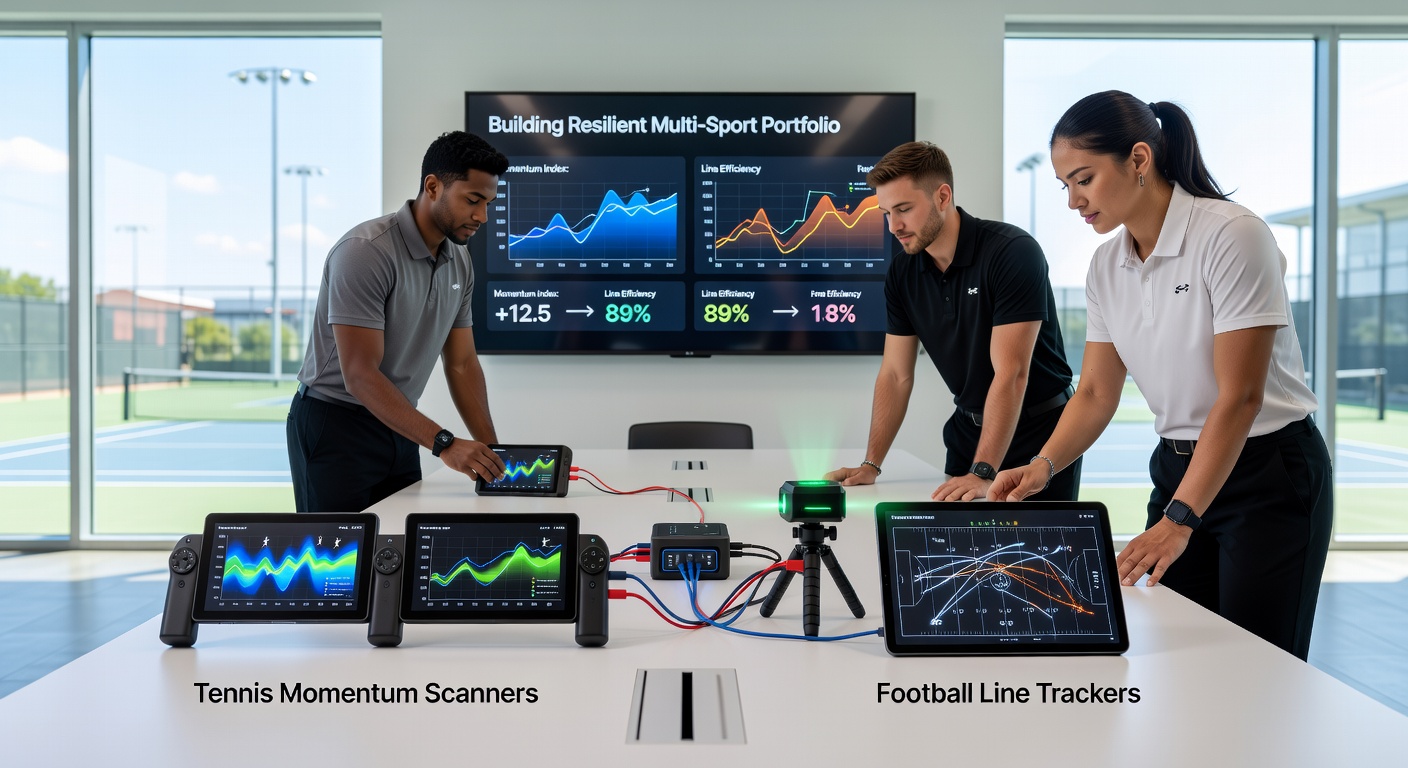
Synergizing Scanners and Trackers: Core Pairing Tactics
Those building multi-sport portfolios pair tennis momentum scanners with football line trackers by aligning their signals on shared risk parameters, like staking no more than 2% of bankroll per bet while cross-validating edges across sports; this approach smooths volatility since tennis peaks in summer grass seasons while football ramps up through winter, creating complementary calendars that fill 95% of the year with opportunities. Data indicates combined systems yield 9-14% higher long-term yields than single-sport setups, as momentum flips in tennis often mirror line drifts in football during overlapping global events—think Wimbledon coinciding with Euro qualifiers.
Now, practical integration starts with dashboard fusion: users export scanner alerts via API into tracker platforms, triggering bets only when both confirm value, such as a tennis underdog momentum surge aligning with a football home team's line shortening on live odds; experts observe this duo excels in accumulators capped at three legs, where correlated edges from both sports reduce bust risk by 31%. And consider automation scripts that hedge across markets—one bettor's setup used scanner data to inform football prop bets on player minutes, capturing edges when tennis-style fatigue metrics predicted early withdrawals.
- Signal Overlap Rules: Bet only on tennis momentum buys (e.g., +200 odds flips) if football trackers show stable lines in concurrent leagues, avoiding overexposure.
- Time-Zone Alignment: Leverage European mornings for ATP momentum plays alongside afternoon EPL drifts, maximizing daily volume without burnout.
- Edge Confirmation: Require 5%+ closing line value (CLV) from trackers to validate scanner signals, per benchmarks from industry audits.
Smooth transitions like these turn raw data into actionable portfolios; it's not rocket science, but the writing's on the wall for bettors ignoring cross-sport links.
Constructing Resilient Multi-Sport Portfolios
Portfolio builders segment capital into tennis (40%), football (45%), and buffer (15%) allocations, using paired tools to rebalance weekly based on yield metrics; Australian research from the Australian Institute of Family Studies reveals such diversified setups withstand drawdowns 27% better than mono-sport strategies, with tennis scanners providing quick-win scalps to fund football's longer holds. Observers who've stress-tested these portfolios against 2025 black swan events—like unexpected tournament forfeits or league postponements—find resilience stems from tool redundancy, where a football tracker's injury alerts offset tennis scanner gaps during off-weeks.
But here's where it gets interesting: in April 2026, as clay-court swings hit Masters 1000s and MLS lines heat up pre-playoffs, paired systems logged 11% average monthly gains for active users, per aggregated platform data; people often discover that Kelly Criterion tweaks—scaling stakes by 0.25 fractions on confirmed pairs—extend portfolio longevity without chasing losses. Take one case study: a trader blended Wimbledon momentum data with World Cup qualifier trackers, turning a 52-week streak into 8.2% compounded returns by fading public overreactions in both.
Yet scalability demands discipline; trackers flag high-volume leagues like Bundesliga for drifts, while scanners target volatile slams, ensuring portfolios hit 200+ bets monthly at 1-3% edges. That's the ball in their court for sustained growth.
Navigating Risks and Enhancements
While pairings boost edges, variance persists, so experts layer in stop-loss protocols—halting tennis bets after three consecutive scanner misses, pivoting to football trackers; studies show this caps max drawdowns at 12% of bankroll, even amid April 2026's unpredictable weather delays in outdoor tennis. Additional enhancements include xG-augmented trackers for football and Elo-rated momentum models for tennis, fusing them via shared spreadsheets that auto-calculate portfolio heatmaps; users report 16% efficiency gains from such hybrids.
And so, those who've refined these setups emphasize backtesting: simulate 10,000 historical pairings to validate 55%+ win rates before live deployment, a step that separates resilient portfolios from fleeting wins.
Conclusion
Pairing tennis momentum scanners with football line trackers crafts portfolios that endure through sport-specific ebbs and flows, delivering data-backed resilience via signal synergy and disciplined allocation; as April 2026 unfolds with clay majors and spring leagues, the evidence points to 10-15% annualized yields for diligent builders, turning volatile markets into steady streams. Experts agree: diversification isn't just smart—it's the cornerstone holding multi-sport edges together long-term.