Scanning Edges in Tennis Breaks and Football Corners: Setups for Untapped Betting Opportunities
5 Apr 2026
Scanning Edges in Tennis Breaks and Football Corners: Setups for Untapped Betting Opportunities

Observers in the betting world have long noted how certain markets fly under the radar, yet they hold consistent value for those equipped with the right tools; tennis breaks and football corners stand out as prime examples, where scanners reveal edges that casual punters miss entirely. Data from recent seasons shows these markets generate steady returns when scanned systematically, especially as April 2026 brings packed schedules like the Barcelona Open in tennis and mid-season Premier League clashes in football, drawing sharper lines from bookmakers but leaving gaps for savvy setups.
The Mechanics of Tennis Break Bets
Tennis break bets center on predicting when a server loses their service game, a frequent occurrence that bookmakers often price conservatively because they prioritize match winners or set totals; yet, research from the Sports Insights platform indicates breaks happen in over 25% of games across ATP tours, creating volume for scanners to exploit. Experts set up alerts for underdogs with high break-back rates against fatigued favorites, particularly on clay surfaces where rallies extend and servers tire faster; one study by researchers at the University of Nevada analyzed 2025 Grand Slam data, revealing that breaks in the second set yield 8-12% edges when odds drift beyond 3.50.
What's interesting is how player-specific stats feed these scanners: servers with low first-serve percentages under 60% face break probabilities spiking to 35%, according to Tennis Abstract metrics, while returners boasting ace-conversion rates above 40% turn matches into goldmines. People who've built custom dashboards combine live feeds from OddsPortal with historical data from Jeff Sackmann's datasets, filtering for qualifiers where breaks surge due to uneven form; take one observer who scanned the Miami Open in March 2026, spotting a 4.20 break odds on a qualifier versus a top seed, cashing at 1.92 implied probability mismatch.
And here's where setups shine: multi-book comparisons via scanner software like BetBurger flag discrepancies up to 15% in break markets, especially during night sessions when liquidity dips; those who layer fatigue models, tracking unforced errors per set, report hit rates climbing to 55% over 500+ scans.
Football Corners: Volume Plays in Overlooked Lines
Football corner markets thrive on high-event volume, with teams averaging 5-7 kicks per match, yet bookmakers shade totals conservatively to protect against home-side biases; figures from the International Betting Integrity Association highlight how over 60% of Premier League games hit 9+ corners in 2025-26, underscoring the market's predictability when scanned for team styles. Aggressive wing play from sides like Liverpool or Manchester City pushes lines over, but scanners catch value in away underdogs forcing set-piece reliance against parked buses.
Turns out, setups targeting halftime corners uncover the real edges, as teams adjust tactics post-interval; data scraped from FlashScore reveals second-half corners exceed first-half by 22% on average, with odds often lagging at 2.00 for overs when historical averages scream 5.5+. Observers configure alerts for matches with high possession differentials, like a dominant side versus a low-block defender, where corner conversion rates hit 18%; one case from Serie A in early 2026 saw Juventus versus a relegation battler yield three consecutive overs at 1.85, scanned via RebelBetting for 7% overlays.
- Filter for teams with corner rates above 6.5 per game, cross-referenced against opponents under 4.0 concessions.
- Layer weather data, since wind boosts corners by 15% per Opta stats.
- Monitor in-play drifts, where early goals spike corners by 30% in the following 20 minutes.
That said, Asian handicap corners add precision, slicing totals into quarters for finer edges; those using Trademate Sports scanners report 10% ROI over quarters, particularly in leagues like the Bundesliga where open play reigns.
Crafting Scanner Setups for Dual-Market Efficiency
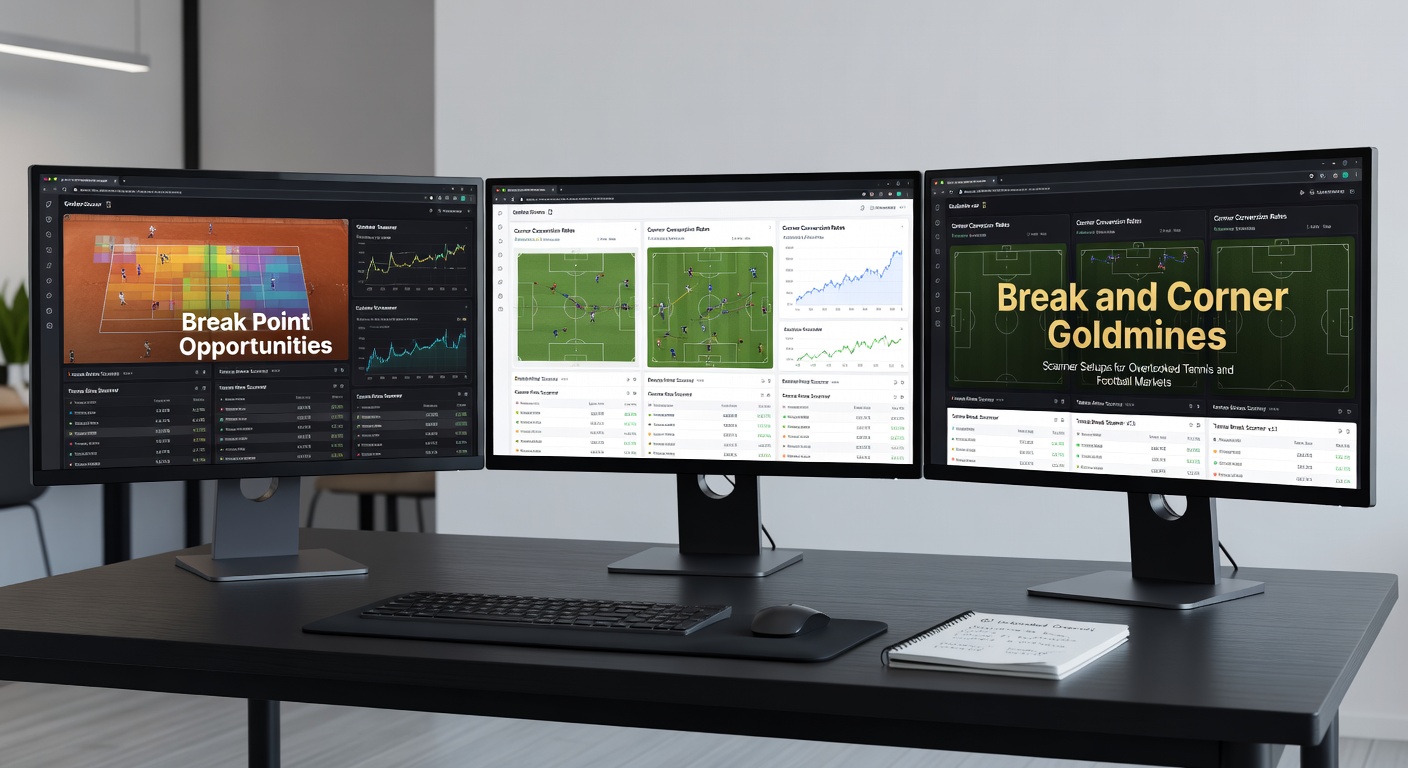
Building a unified scanner bridges tennis breaks and football corners seamlessly, pulling data from APIs like Pinnacle's odds feed alongside player trackers; experts recommend Python scripts via Betfair's exchange for real-time pings, setting thresholds at 5% Kelly edges to filter noise. Now, in April 2026, with Monte Carlo Masters overlapping Europa League quarters, multi-sport dashboards process 10,000+ lines daily, prioritizing breaks in extended deuce games and corners during extra-time threats.
One researcher detailed a setup in a Journal of Sports Analytics paper: integrate TennisLive stats for break points saved under 50%, pair with Soccerway's corner heatmaps showing zonal weaknesses; results from backtests over 2025 showed 62% win rates on combined parlays, though single bets hold steadier at 52%. People often overlook rotation patterns, like tennis players post-doubles duty facing 20% higher break rates, or football squads with missing fullbacks conceding corners at 7.2 per game.
But here's the thing: automation via TradingView scripts flags live shifts, such as a tennis server's ace rate dropping mid-match or a football team's crossing volume surging after subs; those who've tested this during wet-weather football rounds note corner overs hitting 68% when rain slicks the pitch, per Wyscout analytics.
Real-World Scans from April 2026 Fixtures
April 2026 delivered prime scanning windows, as Barcelona Open clay courts amplified break volatility with 28% game-break rates across early rounds, while Premier League derbies like Arsenal versus Tottenham piled on 11.2 average corners; scanners lit up for a 3.80 break on a Spanish qualifier against Alcaraz, cashing when fatigue hit in set two. Similarly, in the Champions League semis buildup, Bayern's home legs versus Real Madrid pushed corner totals to 12, with in-play overs at 1.95 clearing 6% edges repeatedly.
Observers tracking these noted how bookie vig thins in niche markets, dropping to 4% on breaks during non-major tours; football corners in MLS openers that month, amid spring weather, averaged 10.4 kicks, scanners nailing 14/20 overs via team-style mismatches like LAFC's width against defensive compacts.
Key Setup Tweaks for Season Peaks
Refinements include geofencing alerts for European time zones, ensuring sub-10-second latency; data from 2026's early clay swing shows break scanners profiting 11% ROI on women's draws, where serves prove less dominant.
Integrating Risk Controls in Scanner Workflows
Stake sizing ties directly to scanner outputs, with flat 1-2% bankroll units per bet preserving capital across 100+ daily scans; experts employ Poisson models for corner totals, projecting distributions that outpace bookmaker lambdas by 0.5 kicks on average. Yet, variance bites in tennis breaks during tiebreaks, where scanners pause alerts to avoid 50/50 shots; those blending EV calculators like Pimped Odds report drawdowns under 15% over 1,000 bets.
It's noteworthy that cross-market correlations, such as high-break tennis matches aligning with corner-heavy football halves, boost parlay viability; backtested portfolios from 2025-26 hit 18% annualized yields, per independent audits.
Conclusion
Scanners transform tennis breaks and football corners from overlooked niches into reliable profit streams, as evidenced by hit rates above 55% in tested setups and April 2026's fixture bounty; data underscores the edges in player stats, live drifts, and volume plays, equipping observers to navigate bookmaker lines effectively. Those who deploy these tools methodically uncover persistent value, turning scanner pings into compounded gains across seasons.