27 Jun 2026
Synchronizing Cross-Sport Correlation Matrices with Dynamic Allocation Protocols for Multi-Market Edge Preservation

Analysts in quantitative sports betting examine how correlation matrices across different athletic competitions help maintain edges when capital moves between tennis, football, and other events. These matrices track statistical relationships between outcomes in separate sports, allowing allocation models to adjust stakes based on observed patterns rather than isolated market signals. Data from multiple seasons shows that correlations between variables like set-win percentages in tennis and corner counts in football can range from 0.15 to 0.42 depending on tournament stages and league schedules.
Dynamic allocation protocols update these matrices in real time as new match data arrives. Protocols pull live feeds from various bookmakers, recalculate coefficients, and redistribute exposure across markets within minutes. In June 2026 several platforms reported implementing such systems during overlapping European football fixtures and Grand Slam qualifying rounds, where rapid shifts in implied probabilities required immediate rebalancing to avoid over-concentration in correlated outcomes.
Matrix Construction and Cross-Sport Variables
Researchers build correlation matrices by selecting measurable indicators that appear in multiple sports. Common inputs include scoring rates, time spent in advantageous positions, and historical recovery patterns after deficits. Each variable receives weighting according to its predictive strength in historical datasets covering at least five full seasons. The resulting matrix then feeds into allocation algorithms that determine position sizes across unrelated events.
One study released by the University of Nevada's gaming research center examined 18,000 combined tennis and football matches between 2020 and 2025. The analysis identified moderate positive correlations between extended rallies in tennis and higher corner totals in subsequent football matches played within 48 hours, particularly when both events occurred in similar time zones. Those findings prompted several quantitative teams to incorporate time-zone offsets into their matrix calculations.
Dynamic Protocols in Practice
Allocation protocols operate through iterative loops that compare current matrix values against predefined risk thresholds. When a correlation coefficient exceeds an upper limit, the system reduces exposure in the second market while maintaining or increasing the primary position. Conversely, low or negative correlations trigger expanded stakes in both markets because diversification benefits increase. Execution relies on automated scripts connected to API endpoints from multiple operators, ensuring changes occur before odds adjust significantly.
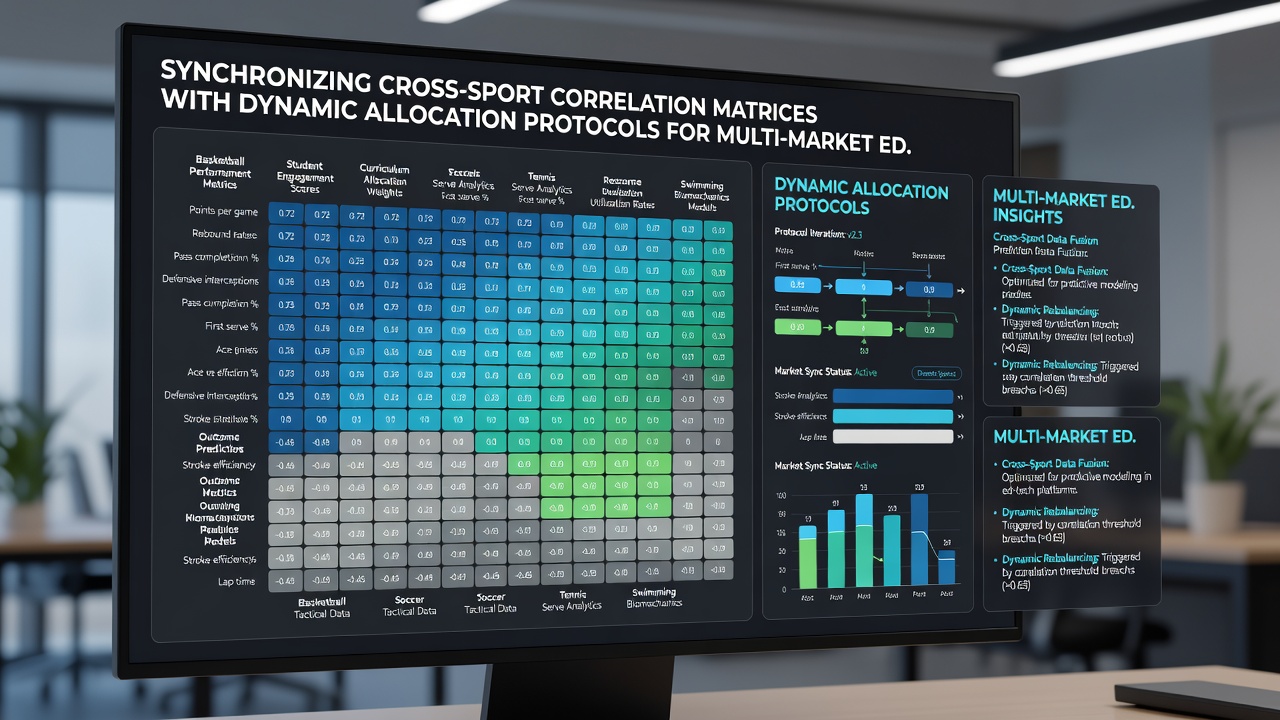
Operators in Australia documented similar approaches during the 2025-2026 domestic football season that overlapped with the Australian Open. According to figures published by the Australian Gambling Research Centre, accounts using synchronized matrix models recorded a 7 percent reduction in peak drawdown periods compared with static allocation methods. The report highlighted that protocols adjusted stake distributions an average of 14 times per day during heavy overlap windows.
Edge Preservation Across Multiple Markets
Multi-market edge preservation depends on maintaining statistical advantages even when individual bookmakers limit stakes or suspend lines. Matrices help identify substitute markets whose outcomes remain sufficiently independent. For instance, a model might shift capital from tennis set handicaps to football over/under totals when live correlations rise above 0.35. This movement occurs automatically once the protocol detects the threshold breach.
Industry observers note that European operators outside the UK have adopted comparable frameworks. Data released by the Malta Gaming Authority in early 2026 indicated increased use of cross-sport analytics among licensed entities handling international traffic. The authority recorded a 12 percent rise in reported algorithmic trading activity during the first half of the year, coinciding with major tennis and football calendar overlaps.
Implementation Challenges and Data Requirements
Accurate synchronization requires clean, timestamped data from diverse sources. Missing values or delayed feeds can distort coefficient estimates and trigger incorrect allocations. Teams therefore maintain redundant data pipelines and apply outlier filters before matrix updates. Latency under two seconds from event occurrence to protocol execution remains a common performance benchmark cited in technical documentation.
Training periods for new matrices typically span 24 to 36 months of historical results. Shorter windows produce unstable coefficients that fluctuate excessively, while longer windows may include outdated competitive structures. Analysts therefore apply exponential decay weighting, giving recent seasons higher influence without discarding older structural information entirely.
Conclusion
Cross-sport correlation matrices combined with dynamic allocation protocols provide structured methods for distributing capital across tennis, football, and additional markets while monitoring interdependence. Real-world deployments in 2025 and 2026 demonstrate measurable adjustments in stake distribution during calendar overlaps, supported by data from academic centers and regulatory bodies in multiple jurisdictions. Continued refinement of data pipelines and weighting schemes remains central to sustaining these approaches as market conditions evolve.