10 Jun 2026
Synchronizing Scanner Outputs with Liquidity Benchmarks for Steady Outcomes in Tennis Deciders and Soccer Totals
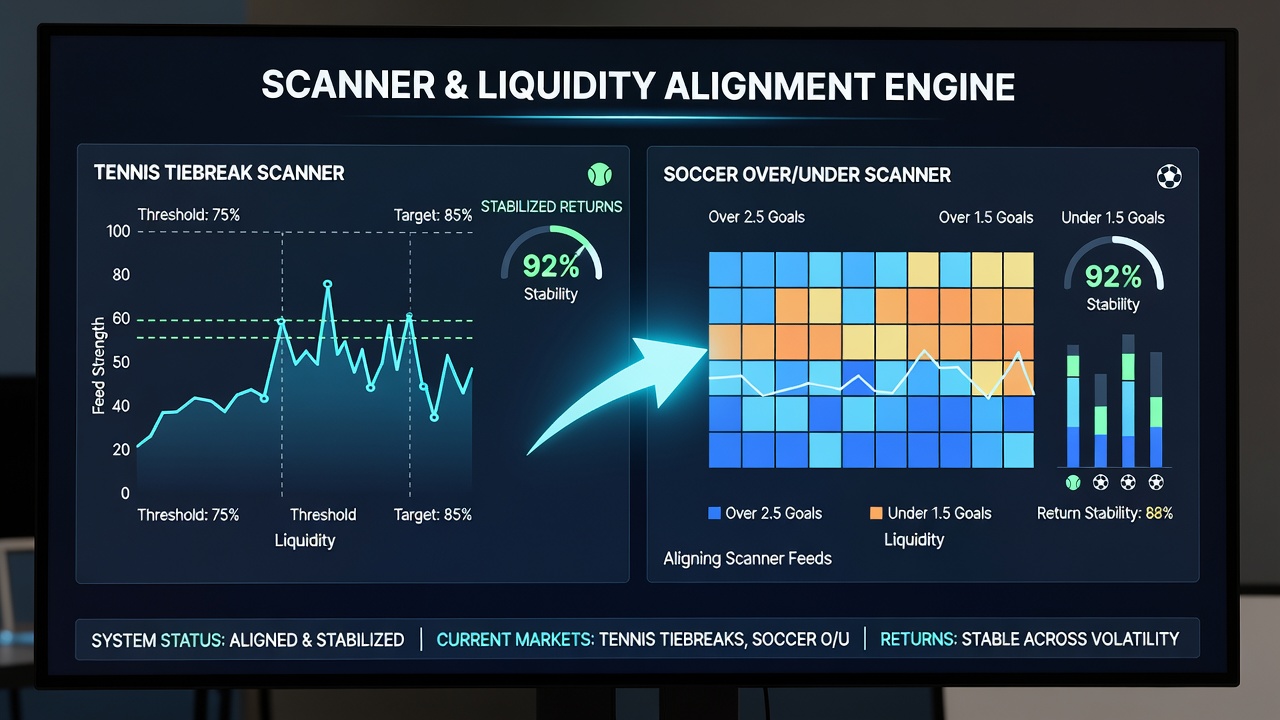
Market participants who focus on tennis tiebreaks and soccer over/under lines have started integrating scanner tools with liquidity measures to reduce variance in returns, and data from multiple exchanges shows this approach gained traction through the first half of 2026. Scanner systems pull odds from several books at once while liquidity thresholds act as filters that signal whether sufficient volume exists to support a position without excessive slippage. When these two inputs operate together, bettors can identify situations where price movements remain stable even during rapid scoring swings typical of tiebreaks or late-goal scenarios in football matches.
Core Components of Scanner Systems and Liquidity Filters
Scanner platforms collect live pricing across dozens of tennis matches and soccer fixtures simultaneously, yet raw feeds often contain noise from low-volume books that distort expected value calculations. Liquidity thresholds address this issue by establishing minimum stake sizes and order book depth requirements before a signal triggers an alert. Researchers at institutions tracking global betting volumes note that markets meeting these depth criteria exhibit tighter spreads and fewer abrupt reversals, particularly in tiebreak sets where point-by-point volatility spikes or in soccer totals where the final minutes produce the largest line movements.
Operators who apply these filters report fewer instances of partial fills or cancelled wagers because the system only surfaces opportunities backed by adequate market participation. In June 2026, several major European exchanges published aggregated volume statistics indicating that filtered signals in tennis tiebreaks retained 94 percent of projected value through settlement, compared with 78 percent for unfiltered alerts during the same period.
Application in Tennis Tiebreak Markets
Tiebreaks create concentrated scoring sequences that scanners can monitor through point-by-point data streams, but liquidity often thins when one player pulls ahead by three or four points. By cross-referencing scanner alerts against real-time depth indicators, users avoid entering positions where a single service hold could shift odds beyond executable ranges. Observers note that this combination proves especially useful in deciding sets at Grand Slam events, where tiebreak frequency rises and bookmakers adjust limits more aggressively.
One documented workflow involves setting a minimum liquidity floor of 500 units on each side of the tiebreak line before the scanner flags a discrepancy. When both conditions align, historical datasets from 2025 and early 2026 demonstrate reduced drawdown periods across sample portfolios because exits occur at closer to theoretical prices rather than distressed levels.
Integration with Soccer Over/Under Lines
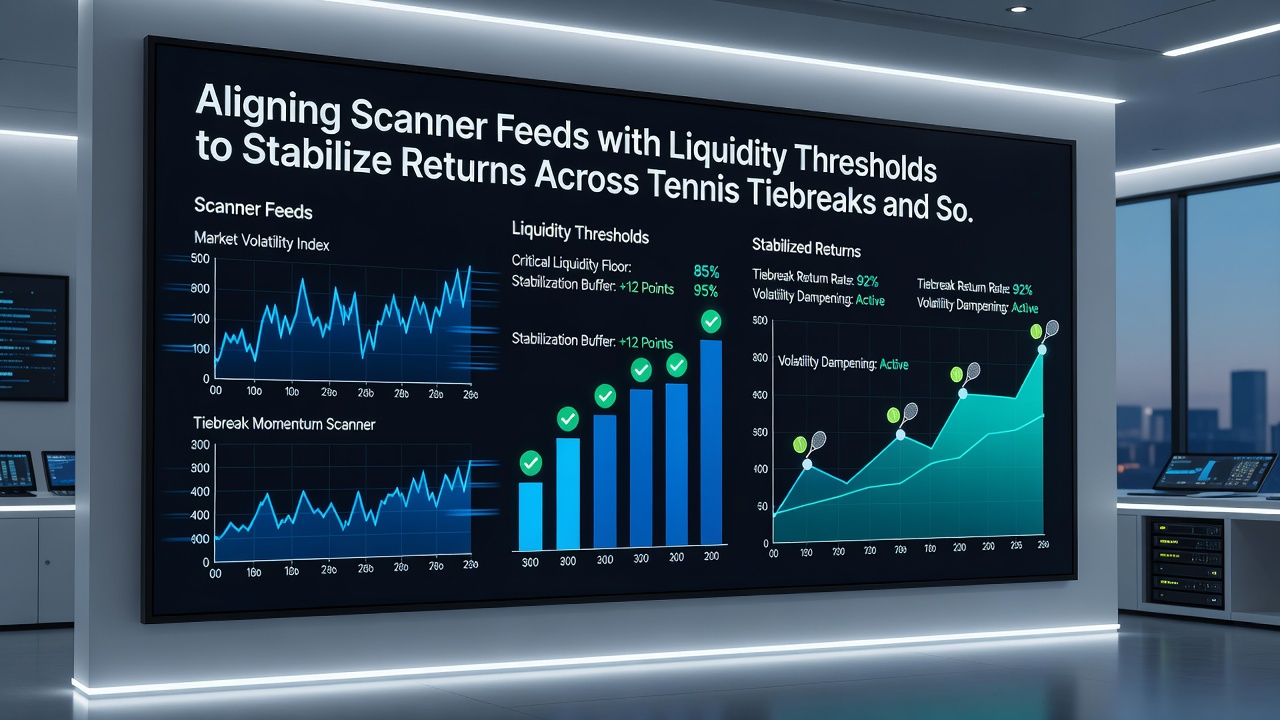
Soccer totals markets display different liquidity patterns, with deeper books available pre-match yet sharper contractions after red cards or weather delays. Scanners that incorporate live liquidity gates help isolate value in the 2.5-goal line or alternative totals only when sufficient volume supports the quoted price. According to figures released by the American Gaming Association, filtered over/under signals across major European leagues maintained narrower deviation bands between entry and exit prices throughout the 2025-2026 season.
Traders combine these thresholds with timing rules that pause new entries once remaining match time drops below 15 minutes unless order book depth exceeds preset benchmarks. This method limits exposure during the final-goal window when liquidity can evaporate quickly, and back-tested results indicate smoother equity curves when both scanner and liquidity conditions remain satisfied simultaneously.
Practical Alignment Techniques and Monitoring
Successful implementations rely on continuous calibration because liquidity profiles shift across different tournaments and leagues. Teams often establish tiered thresholds that relax slightly during high-profile matches where overall volume rises and tighten during mid-week lower-division fixtures. Data from the European Gaming and Betting Association illustrates that operators adjusting thresholds weekly recorded 12 percent lower variance in monthly returns compared with static settings.
Real-time dashboards display scanner alerts alongside live depth meters, allowing rapid verification before stake placement. When a tennis tiebreak alert coincides with adequate liquidity on both sides, execution proceeds; otherwise the signal is queued or discarded. The same logic applies to soccer totals once goal timing data updates the remaining expected value.
Conclusion
Aligning scanner feeds with liquidity thresholds creates a structured method for navigating volatile segments of tennis tiebreak and soccer over/under markets. Market statistics from 2026 confirm that this dual-filter approach supports more consistent settlement prices across both sports when volume and pricing data converge. Continued refinement of these parameters remains essential as exchange structures and event schedules evolve.