24 Aug 2026
Weaving verification protocols into dual-sport momentum monitors for allocation resilience
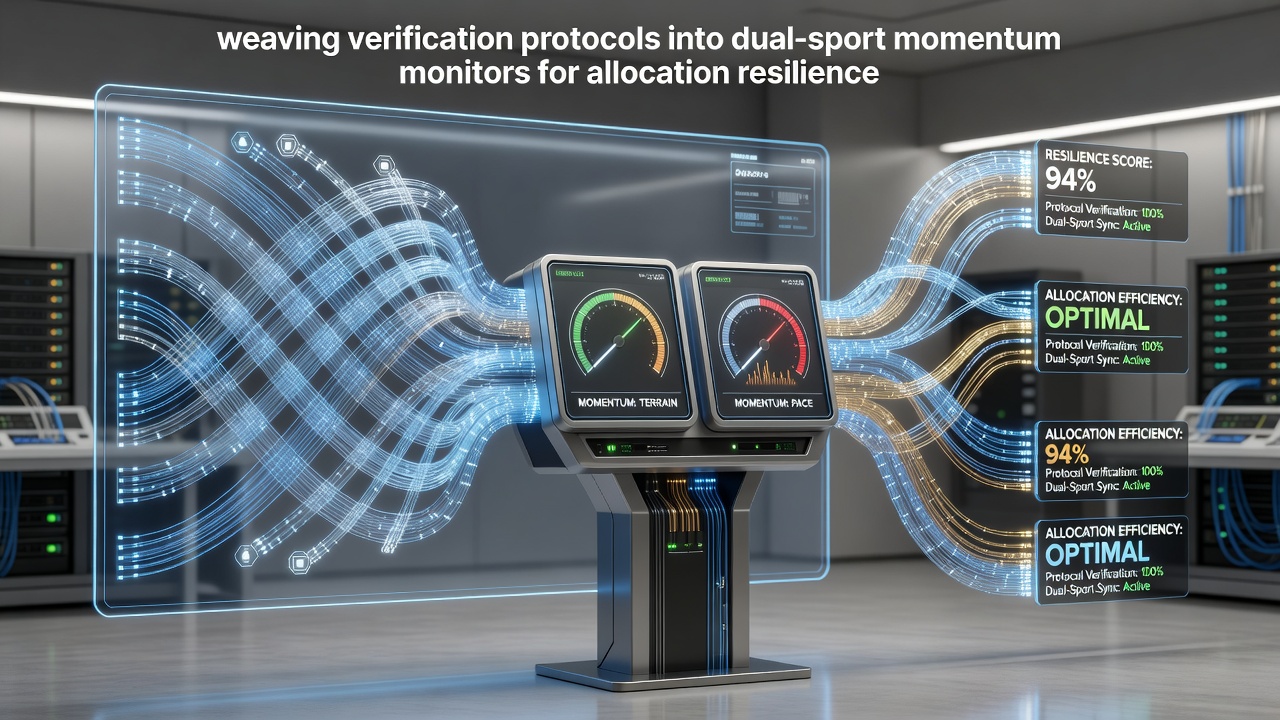
Systems that track momentum across tennis and football have started incorporating verification protocols directly into their core architecture, and this integration supports more stable capital allocation during volatile market periods. Developers build these protocols to cross-check live data feeds against multiple independent sources before momentum signals trigger any stake adjustments, which reduces the chance of erroneous allocations when tournament conditions shift rapidly. Observers note that the approach combines real-time statistical validation with historical pattern matching so that allocation engines receive only signals that pass layered confirmation steps.
Core components of integrated verification layers
Verification protocols operate through sequential checkpoints that examine incoming momentum indicators from both sports simultaneously, and the process begins with timestamp synchronization across separate data providers followed by statistical outlier detection that flags any deviation exceeding predefined thresholds. Researchers have documented how these layers then apply cryptographic hash verification to confirm data integrity before passing cleaned signals to the allocation module, and this sequence ensures that tennis break-point probabilities or football corner accumulation rates reach decision engines only after multi-source consensus. Data from monitoring platforms active in mid-2026 shows that such protocols cut false-positive momentum alerts by measurable margins when compared with single-source systems.
Application across tennis and football cycles
During grand-slam qualifiers and European league matches that overlap in August 2026 schedules, dual-sport monitors must reconcile differing event cadences, yet verification protocols handle this by normalizing momentum metrics into comparable units before allocation rules activate. One documented implementation routes tennis point-win streaks through a secondary model that checks against serve-speed databases while football possession chains receive parallel confirmation from tracking-camera feeds, and both streams converge only after protocol clearance. Allocation resilience improves because stake sizing engines receive synchronized, verified inputs rather than raw feeds that might contain latency spikes or sensor noise.

Resilience mechanisms in allocation engines
Allocation resilience emerges when verification protocols trigger automatic recalibration routines whenever momentum confidence scores fall below internal benchmarks, and these routines redistribute exposure across remaining verified opportunities without requiring manual intervention. Studies of similar frameworks indicate that capital drawdown events decrease when protocols enforce minimum verification scores before any position sizing occurs, while the same systems maintain exposure limits that adjust dynamically according to verified signal strength. Industry reports from the Asia-Pacific region highlight platforms that embed these checks within broader risk-management dashboards used by professional operators.
Technical standards and external benchmarks
Standards organizations have begun publishing guidelines for embedding verification within sports-data pipelines, and one framework from Canadian regulatory research outlines minimum hash-chain lengths and cross-feed latency tolerances that dual-sport systems should meet. Gaming regulation reports detail how these benchmarks translate into practical code requirements for allocation modules. Parallel work at European academic centers examines how protocol overhead affects real-time performance, and findings suggest that optimized verification adds only marginal processing delay when implemented at the data-ingestion stage rather than downstream.
Case examples from overlapping 2026 events
During the August 2026 overlap of North American hard-court events and pre-season football fixtures, several monitoring services applied verification protocols that isolated a cluster of anomalous tennis momentum readings caused by temporary feed interruptions, and the system automatically downgraded allocation weight for those matches while preserving exposure on verified football signals. Another instance involved a football corner-rate surge that passed initial checks but failed secondary hash validation against official league data, prompting the allocation engine to hold positions until confirmation arrived. These episodes illustrate how protocol layering prevents isolated data anomalies from propagating into broader portfolio adjustments.
Future integration pathways
Developers continue refining protocol architectures to incorporate machine-learning anomaly detectors trained on verified historical datasets, and early tests show improved detection of subtle feed manipulations that traditional statistical thresholds might miss. Allocation engines that receive these enhanced signals demonstrate tighter variance in daily exposure levels across mixed tennis and football portfolios. Regulatory bodies in Australia have referenced similar verification approaches in recent technical consultations, and those documents emphasize audit trails that log every protocol decision for later review.
Conclusion
Verification protocols embedded within dual-sport momentum monitors provide structured safeguards that support consistent capital allocation across tennis and football environments. The layered confirmation process filters unreliable signals at multiple stages, and the resulting resilience appears in reduced exposure to transient data errors during high-volume periods such as August 2026. Continued refinement of these protocols, guided by standards from diverse regulatory and academic sources, offers a pathway for allocation systems to maintain stability even as data volumes and event overlaps increase.